 Nostalgia Camera
Photograph what connects the day
An album does not have to be a collection of landmarks. Sometimes the photograph you want later is the bag beside the door, the table after lunch or the friend who always falls asleep on the way home. A small sequence can give those ordinary details a place beside the big view.
Try making six frames during one day. This is a creative prompt, not a requirement to stage every moment. Ask before photographing people when appropriate, and put the camera away when taking a picture would interrupt the experience.
Frames one and two: leaving and arriving
Start with a small sign of departure: shoes by the door, a packed bag or the road seen from a safe stopping place. Then make a wider arrival photograph that gives the next pictures a setting. Avoid making both frames the same distant view.
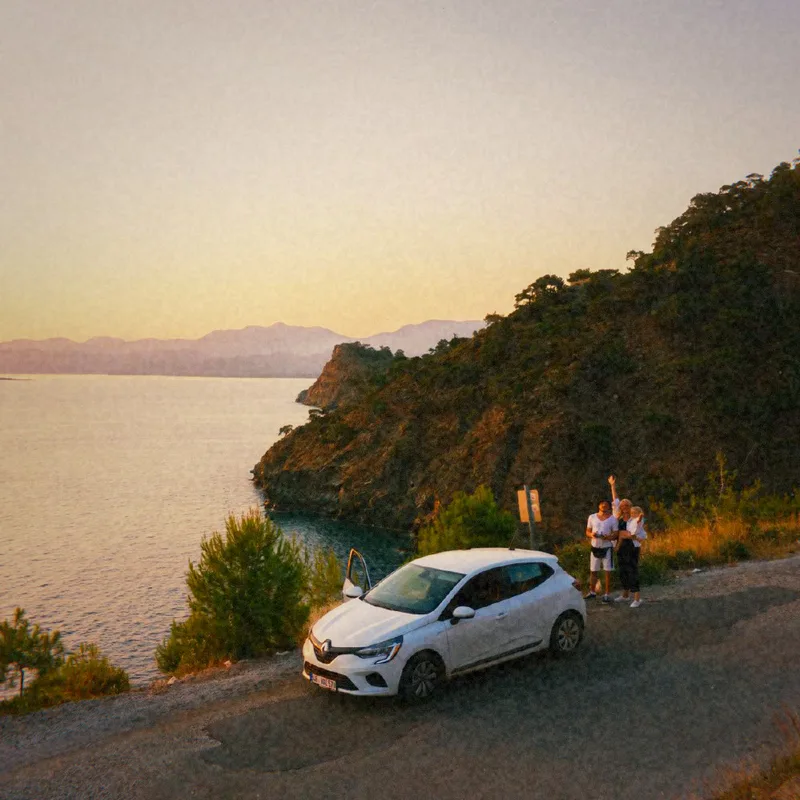
Our road-trip scene is a licensed example of this kind of setting, not a photograph from the developer’s own holiday. In the Time Machine you can compare its original with 1895, 1972 and 2004 outputs made by the app engine.
Frames three and four: a person and a detail
Make one frame about the people sharing the day. Leave enough context for their surroundings to matter. For the next frame, move your attention to something small: a folded map, a cup, a handwritten label or the remains of a picnic.
The contrast in scale gives the sequence room to breathe. Choose a look after you have a useful photograph. Warmth and grain can add a camera character, but they do not replace an interesting gesture or a clearly framed detail.
Frames five and six: a pause and an ending
Record a quieter interval and then a sign that the day is ending. That could be a room after everyone has left or a street on the way home. The closing picture does not need a dramatic sunset. It only needs to feel like a place to stop.
Choose three of the six frames for a small strip. In our Memory Strip demo, practice with the licensed scenes, select an era for each and save a postcard. The postcard includes photo credits; the people shown are not endorsing the app.
For your own sequence, use Nostalgia Camera on your iPhone, keep the originals, and collect your favorite outputs in an album. A few selected photographs with a sentence about the day can be easier to revisit than a camera roll you never finish scrolling.